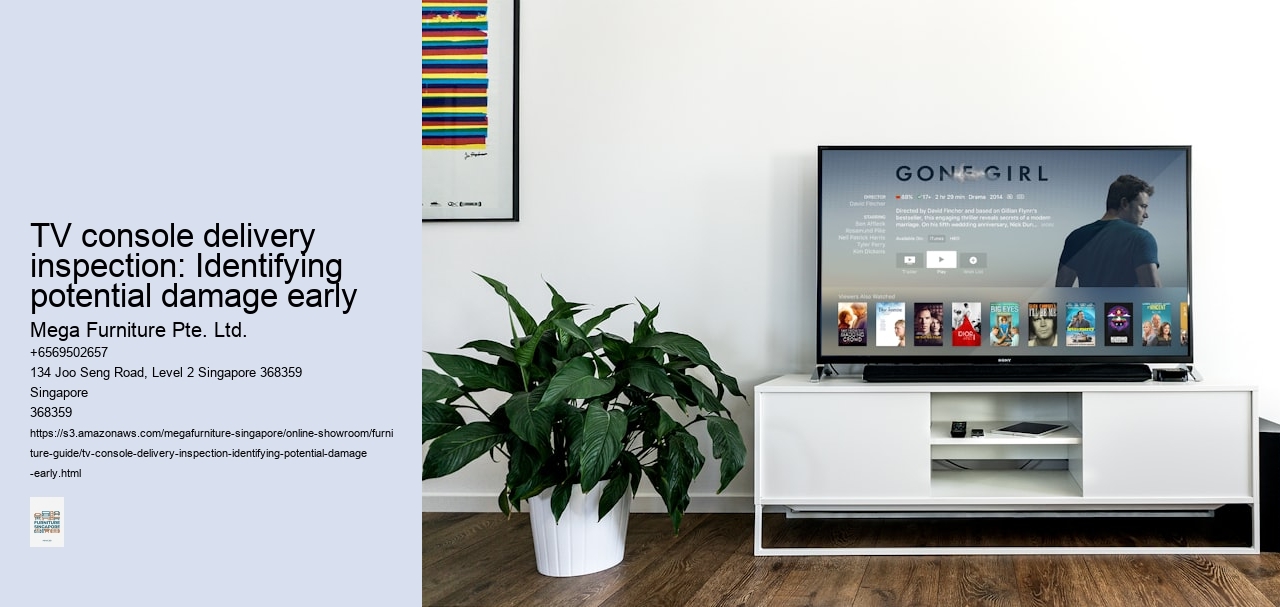
A cat's favourite scratching post is often the nearest vertical corner, which is why a veneered TV console in a pet household rarely lasts beyond the first year. That thin decorative layer peels away with a single determined claw, leaving a permanent eyesore beneath your new 65-inch screen. In Singapore's climate, material choice isn't just about aesthetics; it's a defensive strategy against 80% humidity and curious pets.
Laminated MDF, a common budget option, is particularly vulnerable here. The engineered core absorbs ambient moisture over time, which can cause the entire panel to warp or swell at the edges — a frustrating sight for a console meant to anchor your media wall. More pragmatic choices for our environment include solid, treated hardwoods like rubberwood or teak, which have a natural resistance to moisture, or opting for fully sealed, scratch-resistant melamine surfaces that can withstand both paws and dampness.
For households in older landed properties or estates with known termite activity, the legs matter as much as the carcass. Metal legs, typically powder-coated steel or aluminium, provide an effective barrier against pests that might otherwise find untreated wood an appealing target. This consideration often gets overlooked until it's too late, but it's a straightforward way to future-proof a significant piece of furniture.
Ultimately, the most durable console for a humid, pet-friendly home combines an impervious body with resilient supports. It means prioritising sealed, non-porous materials over decorative but delicate veneers, and accepting that a perfectly scratch-proof finish might limit your colour options to practical mattes and textured woodgrains. You can explore a range of options built with these local realities in mind at Megafurniture's collection. The goal is a console that survives the climate and the chaos, looking presentable long after the novelty of the new TV has worn off.
Open a drawer and look inside. A dovetail joint, where interlocking fingers of wood are glued together, is the hallmark of a cabinet built to last; it resists the racking forces of daily use in a family living room. Stapled or nailed butt joints, by contrast, will loosen over time, especially under the weight of game consoles and media players. That initial inspection takes ten seconds but tells you more about a console's lifespan than any sales brochure. It’s a fundamental test of whether the piece is considered furniture or just assembled board.
Heft matters. Try to lift one end of a prospective 180cm console; if it feels suspiciously light, you’re likely looking at a hollow-core construction with a veneered paper honeycomb inside. That material won’t hold up to accidental kicks or the sustained load of a 65-inch television, and it often produces a disconcerting hollow sound when tapped. A solid-core panel or a frame of substantial timber, while heavier to manoeuvre into your Tampines flat, provides the necessary ballast and silence. There’s a tangible confidence in furniture that doesn’t feel like it might skitter across your vinyl flooring.
A clean media wall is impossible without deliberate cable routing. Look for integrated grommets—those rubber-lined holes in the back panel—that allow cords to pass neatly from your devices into the console’s interior. Better units feature multiple grommets at different heights, accommodating everything from a soundbar’s power lead to a PlayStation’s HDMI cable. Without them, you’ll face a tangled nest of wires visible from the side, defeating the purpose of a streamlined console. It’s a small detail that separates a considered design from an afterthought.
The hinges and drawer runners are the moving parts that endure all the stress. Soft-close mechanisms are non-negotiable for any household with children; they prevent slammed doors and protect fingers, and they quietly signal a higher grade of engineering. Test them repeatedly. Cheap hardware feels gritty when operated and will sag or fail within a year, often requiring proprietary tools for a repair that’s never quite right. Investing here means you won’t hear that distinctive rattle every time someone reaches for a board game.
Look past the showroom sheen. Run your hand over edges and corners—the finish should feel consistently smooth, not waxy or prone to chipping. A high-pressure laminate or a properly cured lacquer will resist moisture from humid Singapore afternoons and the occasional spilled drink far better than a simple painted surface. Check for colour consistency on end grains and inside shelves, areas where cost-cutting manufacturers often apply less material. This is where a console transitions from a display piece to a functional part of your home’s daily rhythm.
The most common misstep isn't about style, but a simple mismatch of centimetres. A buyer envisions a grand 240cm solid wood console anchoring their new 55-inch TV, only to realise it consumes an entire wall in their 12 sqm living room, leaving no space for side tables or a coherent walking path. This oversizing frenzy often ignores the practicalities of BTO corridor access—you might get the unit to your doorstep, but that final 90-degree turn into the flat with a 210cm-long box is a different story entirely. Always measure your lift's interior dimensions, your front door's clearance, and that punishing hallway corner before committing; assuming all consoles fit is a gamble that ends with delivery crews stuck in your stairwell.
Placement errors extend beyond physical bulk. Selecting a dark walnut finish for a north-facing room in a Tampines block can turn a feature piece into a gloomy, light-absorbing slab for much of the day. Conversely, a bright white sintered stone top in a sun-drenched west-facing room in Bedok becomes an unbearable glare source during evening viewing. The room's natural light dictates material choice as much as personal taste does.
Then there's the forgotten infrastructure. A sleek, floating console design looks impeccable in the showroom, but its installed position is useless if the nearest power point is two metres away—you'll be left with a permanent, hazardous trail of extension cords snaking across your floor. The ideal sequence is to first map your existing power and data point locations, along with your router's position, then choose a console that can either conceal those cables internally or sit close enough to avoid a spaghetti junction.
Finally, consider proportion beyond the TV. A console should ground the entire wall composition, not just the screen. A massive TV on a spindly, undersized unit looks precarious and top-heavy, while a low-slung media wall built around a petite screen can feel like an overbuilt shrine. The goal is balance, and that often means the console should be several inches wider than the TV's total width for a stable, integrated look.
A buyer standing in a Joo Seng showroom, tape measure in hand, is often checking one thing: whether a 200cm console will actually fit along the shorter wall of their 4-room BTO living room. Megafurniture’s layout there is deliberate, showcasing units scaled for typical HDB dimensions where every centimetre of depth matters for walkways. It’s a practical starting point, but the real test happens when you cross the island to their Tampines outlet — there, the displays pivot towards condo-appropriate floating designs and cleaner media wall integrations, reflecting a different set of spatial priorities. You should always test drawer action on the spot. Run your hand along the interior edges for splinters, pull each drawer out fully to check for wobble, and listen for a smooth, quiet glide. A stiff or grating mechanism in the showroom will only worsen at home. For modular options, which are increasingly vital as TV sizes balloon past 75 inches, ask to see how the side units attach; some systems use discreet metal brackets, while others rely on simpler interlocking panels that might shift over time. Verifying the stated timber treatments is non-negotiable in our humidity. A sales tag might say “solid rubberwood,” but you’ll want to confirm the type of protective topcoat — is it a basic lacquer or a more resilient, moisture-resistant polyurethane? For veneered options, inspect the edges and seams for any lifting or bubbling, which can be early signs of poor adhesion. That oak-look laminate might suit a dry, air-conditioned condo, but it could be a risk in a ground-floor flat prone to dampness. Consider your storage needs beyond the AV receiver. A family with gaming consoles and board games will need deeper compartments with cable management holes, while a minimalist might prioritise a console with integrated recessed lighting to highlight a feature wall. The choice between a floor-standing behemoth and a wall-mounted float isn’t just aesthetic; it dictates whether you can easily run a robot vacuum underneath or if you’re committing to precise, permanent wall anchors. Assess how the console’s proportions will frame your television — a massive 85-inch screen can dwarf a unit that’s too shallow or low. Many local buyers are now looking for designs that incorporate sintered stone tops or integrated power strips, moving beyond the basic wooden box. It’s worth browsing the full
TV console collectionto compare these finishes in person, as online photos rarely capture the true sheen of a laminate or the weight of a drawer slide.
A common point of failure isn't the TV console itself, but the chaotic handover between its arrival and your final sign-off. In Singapore, that moment often collides with BTO key collection — a frantic period where coordinating a delivery slot feels like a second job. Savvy buyers schedule the console for *after* they have physical access, not based on the estimated completion date; that extra week's buffer avoids the costly headache of storage or redelivery fees.
Once the unit arrives at your doorstep in Tampines or Bedok, inspection is non-negotiable. Don’t just glance — run your hand along every edge and surface under good light before signing the driver’s delivery note. Look for scuffs, dents, or splits in the laminate, especially on corners vulnerable to transit in a van navigating our multi-storey carparks. That signature is your acceptance of condition; any damage noted after is a dispute, not a straightforward claim.
Assembly is where warranties quietly void themselves. Many consignments arrive flat-packed, and while DIY seems straightforward, a misaligned cam lock or over-tightened screw can stress the board internally. More critically, attempting to wall-mount a floating console onto HDB concrete without the correct drill bits and anchors is a recipe for failure — and a sure way for any retailer to deny liability for subsequent collapse. Professional installers handle that; they know the substrate and use the right plugs.
Warranty fine print here holds specific local exclusions. Prolonged exposure to our humidity can warp engineered wood or cause veneers to lift, but that’s rarely covered as a manufacturing defect. The onus is on you to climate-control your living room. Keep your purchase invoice and all warranty documentation filed, not just for the retailer, but as evidence should you need to escalate a significant fault to the Consumers Association of Singapore (CASE), which operates under NEA-regulated guidelines. It’s a tedious step, but it’s the difference between a resolved complaint and a $1,800 lesson.
In a 4-room BTO, the most common TV console question isn't about colour or finish — it's logistics. A buyer on the 12th floor will stare at a 200cm walnut veneer unit and wonder, with genuine dread, if it'll fit in the lift. That's a measurement you need to take yourself; HDB lift door heights can vary, but a typical newer BTO lift opening is around 210cm, leaving a slim margin for manoeuvring. For anything over 180cm, it's worth checking the delivery team's policy on stair-carry charges, especially in older blocks with smaller lifts.
Best material for homes with toddlers? Laminated particle board with rounded edges is the pragmatic choice. It's durable against toy cars and sticky fingers, and the softened corners are a non-negotiable safety feature in a cramped living room. Solid wood might feel more premium, but it's also heavier, costlier, and shows every dent — a laminate finish in a matte grey or white oak can hide a multitude of sins while blending into a neutral scheme.
Securing a floating console to hollow HDB walls is another perennial worry. Standard wall plugs often fail in the cavity; you'll want proprietary toggle bolts or heavy-duty anchors designed for drywall, which expand behind the plasterboard to distribute the weight. It's a job for a professional installer who can locate the studs — because the cost of a repair for a torn-out wall section far exceeds the installation fee.
Console height for a 65-inch TV? Aim for 40 to 50cm from floor to top of the console. This centres the screen at a comfortable viewing level from a typical sofa, and it leaves enough space for a soundbar without obscuring the bottom of the display. The console's length should exceed the TV's width by at least 10cm on each side for visual balance; for that 65-inch set, you're looking at a unit around 180 to 200cm long.
The moment you click 'buy' is precisely when buyers forget the realities of their own living room. It’s a common oversight, and one that often results in a console that’s either a centimetre too long for the wall or a power cord that falls agonisingly short of the socket.
So, re-visit your floor plan with a tape measure and the console’s exact dimensions plotted out — don’t rely on memory. For a 4-room BTO living room, a 180cm console might seem perfect on paper, but you’ll need to account for the swing of a nearby door or the depth of a floating unit that could block a switch. Crucially, verify the power cord lengths for your AV receiver, soundbar, and gaming console; in many HDB layouts, the nearest outlet is behind a perpendicular wall, requiring a three-metre cord that most devices don’t include.
Confirm your delivery details with absolute precision. This means specifying the storey, providing lift lobby access codes if your condo requires them, and noting any tight turns in the common corridor. A bulky 220cm solid wood console is a two-person job that can’t be manhandled up a narrow staircase. A quick call to the retailer to confirm their delivery protocol for upper floors can save a major headache on the day.
Finally, decide on necessary add-ons before checkout. Cable management trays are essential for hiding the nest of wires behind a media wall, while anti-tip kits are a non-negotiable safety investment for households with young children — a top-heavy unit with a large TV is a real hazard. Consider, too, whether you need additional shelf inserts or drawer organisers for that clutter of remote controls and game discs. These small decisions, made calmly before purchase, transform a simple delivery into a successful installation.
The living room of a 4-room BTO flat, typically around 12 to 14 sqm, often has one clear focal wall-and a 240cm console can swallow it whole. That's a deliberate design choice for a family mounting a 75-inch screen, but it's also a commitment; you're left with mere slivers of wall space for anything else. In contrast, a 120cm unit looks purpose-built when integrated into a condo's built-up media wall, where it slots between joinery panels without dominating the entire visual field. A TV console anchors the wall opposite the sofa in the same way a tall bookshelf anchors a corner — long horizontal piece, mix of open and closed storage, defines the visual weight of one whole side of the room. Megafurniture's TV Console range covers floating wall-mounted designs, low-profile freestanding consoles, and modular feature-wall configurations. Most pieces sit at 40-50cm height, sized for screens up to 75 inches.. Console length isn't just about TV size, it's about wall proportion and the room's remaining breathing space. Floor-standing consoles, with their solid legs or plinth bases, become the pragmatic choice for many resale flats. They handle uneven terrazzo or timber floors that haven't been levelled in decades, avoiding the precarious wobble a wall-mounted piece might inherit. Floating consoles demand a more specific context: a solid HDB partition wall that's been properly mapped for studs or, better yet, a reinforced concrete condo wall. That clean, off-the-floor look is a favourite for creating a sense of lightness, but it's entirely contingent on what's behind the plaster. Material choices follow this spatial logic. A console in a humid, open-windowed ground-floor flat near Eunos might need more from its engineered wood than one in a centrally air-conditioned Orchard Road apartment. The popular sintered stone top in a glossy finish can look striking under downlights in a dim media room, but it'll show every fingerprint in a sun-drenched living area facing Bedok Reservoir. You're not just picking a finish; you're matching it to the room's micro-climate and how the light falls at 4pm. Ultimately, the console anchors the room's technology and its aesthetic. A buyer wants storage for routers and game consoles, yes, but they're also buying a long, low line that defines the room's entire lower third. Getting that line wrong-too long, too heavy, too fragile for the wall-means living with a daily reminder of a measurement that was rushed. For a curated range of sizes and mounting types suited to these specific constraints, browse the
TV console collection. The right piece should feel like it grew there, not like it was delivered into a space that fights it.
The living room of a 4-room BTO flat, typically around 12 to 14 sqm, often has one clear focal wall—and a 240cm console can swallow it whole. That’s a deliberate design choice for a family mounting a 75-inch screen, but it’s also a commitment; you’re left with mere slivers of wall space for anything else. In contrast, a 120cm unit looks purpose-built when integrated into a condo’s built-up media wall, where it slots between joinery panels without dominating the entire visual field. Console length isn’t just about TV size, it’s about wall proportion and the room’s remaining breathing space. Floor-standing consoles, with their solid legs or plinth bases, become the pragmatic choice for many resale flats. They handle uneven terrazzo or timber floors that haven’t been levelled in decades, avoiding the precarious wobble a wall-mounted piece might inherit. Floating consoles demand a more specific context: a solid HDB partition wall that’s been properly mapped for studs or, better yet, a reinforced concrete condo wall. That clean, off-the-floor look is a favourite for creating a sense of lightness, but it’s entirely contingent on what’s behind the plaster. Material choices follow this spatial logic. A console in a humid, open-windowed ground-floor flat near Eunos might need more from its engineered wood than one in a centrally air-conditioned Orchard Road apartment. The popular sintered stone top in a glossy finish can look striking under downlights in a dim media room, but it’ll show every fingerprint in a sun-drenched living area facing Bedok Reservoir. You’re not just picking a finish; you’re matching it to the room’s micro-climate and how the light falls at 4pm. Ultimately, the console anchors the room’s technology and its aesthetic. A buyer wants storage for routers and game consoles, yes, but they’re also buying a long, low line that defines the room’s entire lower third. Getting that line wrong—too long, too heavy, too fragile for the wall—means living with a daily reminder of a measurement that was rushed. For a curated range of sizes and mounting types suited to these specific constraints, browse the
TV console collection. The right piece should feel like it grew there, not like it was delivered into a space that fights it.